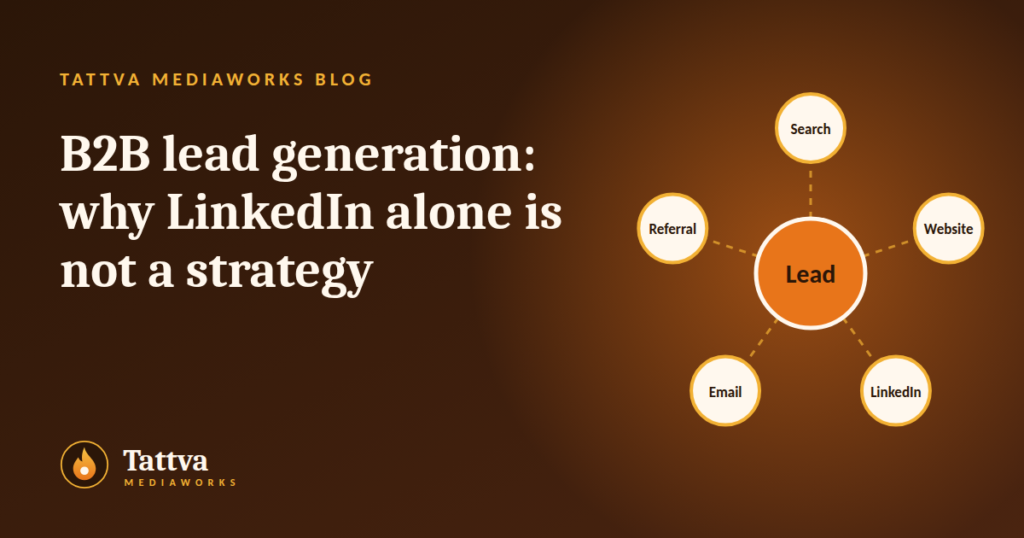
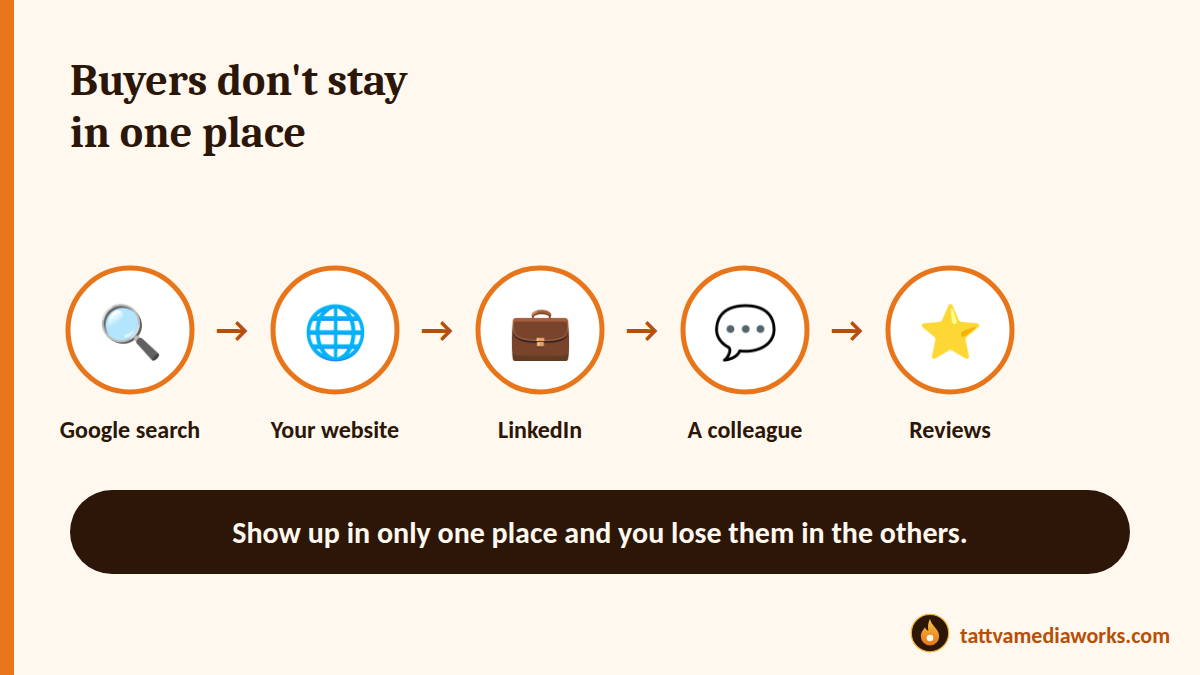
Many B2B teams put all their effort into one channel, usually LinkedIn, and then wonder why leads arrive in bursts or dry up. The problem is not LinkedIn. It is that B2B buyers don’t stay in one place.
A typical buyer searches on Google, checks your website, looks you up on LinkedIn, asks a colleague and maybe reads a review. This often happens over several weeks, with more than one person involved, before anyone fills in a form. If you show up in only one of those places, you lose them in the others.
Here is how to build B2B lead generation that doesn’t depend on a single channel.
1. Be clear about who you sell to
Write down your ideal customer: their industry, company size, the problem they face and who makes the decision. In B2B there is usually more than one person involved: the person who will use your product, the person who holds the budget, and sometimes a technical or finance reviewer. The message that persuades each of them can be different.
The sharper your target, the easier every other step becomes.
2. Be easy to find when they search
Many buyers start with a search. Make sure the answer they find is you:
- A clear page for each service or solution, written in plain language
- Content that answers the real questions your buyers ask before they buy
- “How to choose” and comparison pages that help people decide
- Pages for the regions you serve, such as India and the US, where they make sense
This is the slow, steady channel, but it keeps working long after you publish. Our SEO and organic growth service helps B2B companies build it.
3. Use LinkedIn well, as one channel among several
LinkedIn is strong for building credibility, reaching specific job titles and starting conversations. Used well, it works. Used alone, it is fragile.
- Do: post useful content regularly, comment thoughtfully on your buyers’ posts, and send short, personal connection notes
- Don’t: pitch in your first message, or send long copy-and-paste outreach to people who don’t know you
- Test paid carefully: LinkedIn ads let you target by job title, but they can be expensive, so start small and judge them by qualified conversations, not clicks
4. Give people a simple next step at every stage
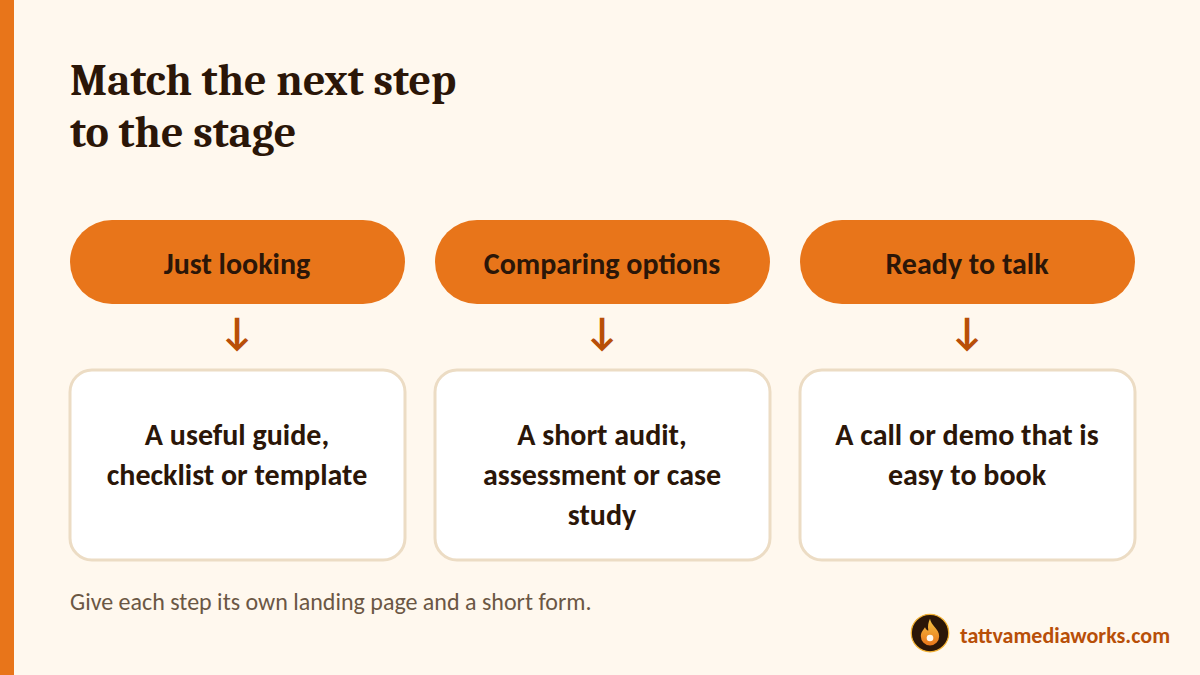
Not everyone is ready to book a demo. Offer a next step that matches where they are:
- Just looking: a useful guide, checklist or template
- Comparing options: a short audit, assessment or case study
- Ready to talk: a call or demo that is easy to book
Give each step its own landing page with a clear promise and a short form. Ask for the minimum: name, work email and company. Ask for a phone number only if you will really call.
5. Follow up fast and keep nurturing
Many B2B leads go cold because nobody replied quickly. Reply as fast as you can, ideally the same day. Then keep in touch with helpful follow-ups: a short email series or a few WhatsApp messages that share something useful, not just “any update?”. Make it easy to unsubscribe, and respect the rules about consent in each country you contact.
6. Track from first touch to revenue
If you can’t see which channel created a customer, you can’t decide where to invest. Start simple: a CRM, or even a spreadsheet, that records where each lead came from and what happened next. Measure:
- Leads by source
- Qualified leads, not just total leads
- Demos or calls booked
- Cost per opportunity, not only cost per lead
Tag your campaign links so your analytics can show the source, and review the numbers every month. Our analytics and conversion optimisation service can set this up for you.
7. Agree with sales on what a good lead is
Many pipelines leak between marketing and sales. Agree on what counts as a qualified lead, who follows up, how quickly, and what happens when someone doesn’t reply. A shared definition saves time and makes the numbers meaningful.
A simple 60-day starting plan
- Days 1 to 15: Define your ideal customer, fix tracking, and build one landing page and one useful guide
- Days 16 to 30: Start posting and outreach on LinkedIn, and publish two pages that answer buyer questions
- Days 31 to 45: Add a small paid test pointing to your landing page, and set up follow-up emails
- Days 46 to 60: Review which channels created real conversations, drop the weakest and double down on the best
Quick checklist
- We know exactly who our ideal customer is
- Our website explains our services in plain language
- We publish content that answers buyer questions
- LinkedIn is one channel, not our only channel
- Every stage has a clear next step
- We reply to leads quickly and follow up
- We track leads from source to revenue
- Marketing and sales agree on what a good lead is
Need a steady pipeline?
At Tattva MediaWorks, we help B2B and SaaS companies build lead generation that connects search, content, LinkedIn and tracking. Read about our approach for B2B and SaaS companies, or ask us for a free growth audit.