Early-stage startups have limited time, limited money and a long list of marketing ideas. The most common mistake is trying everything at once: a little social media, a little advertising, a little email, and no clear way to tell what is working.
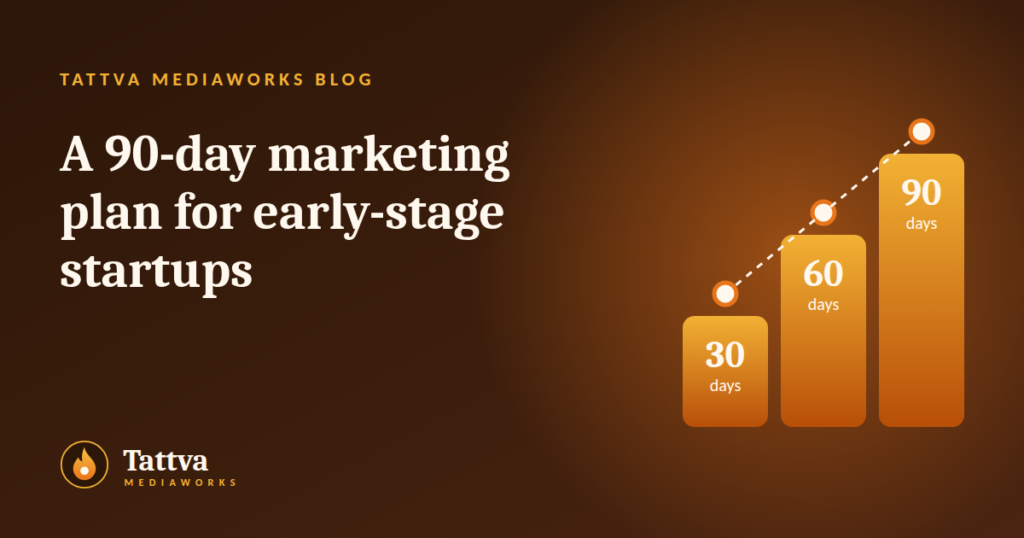
A better approach is to work in three focused phases of 30 days each. In the first, you build the foundations. In the second, you test a small number of channels. In the third, you keep what works and cut what doesn’t. By day 90 you should know who your best customers are, which message works, and roughly what it costs you to win a customer.
Before you start: choose one goal and know your numbers
Pick one goal for the 90 days, with a number. For example: 50 qualified enquiries, 20 paying customers or 500 waitlist sign-ups. A clear goal makes every decision easier.
Then work out three basic numbers, even if they are rough estimates:
- What a customer is worth to you over time
- What you can afford to pay to win one customer
- Where you are today: current visitors, enquiries and customers, so you can see progress
Your plan at a glance
| Phase | Goal | Key actions | What you end with |
|---|---|---|---|
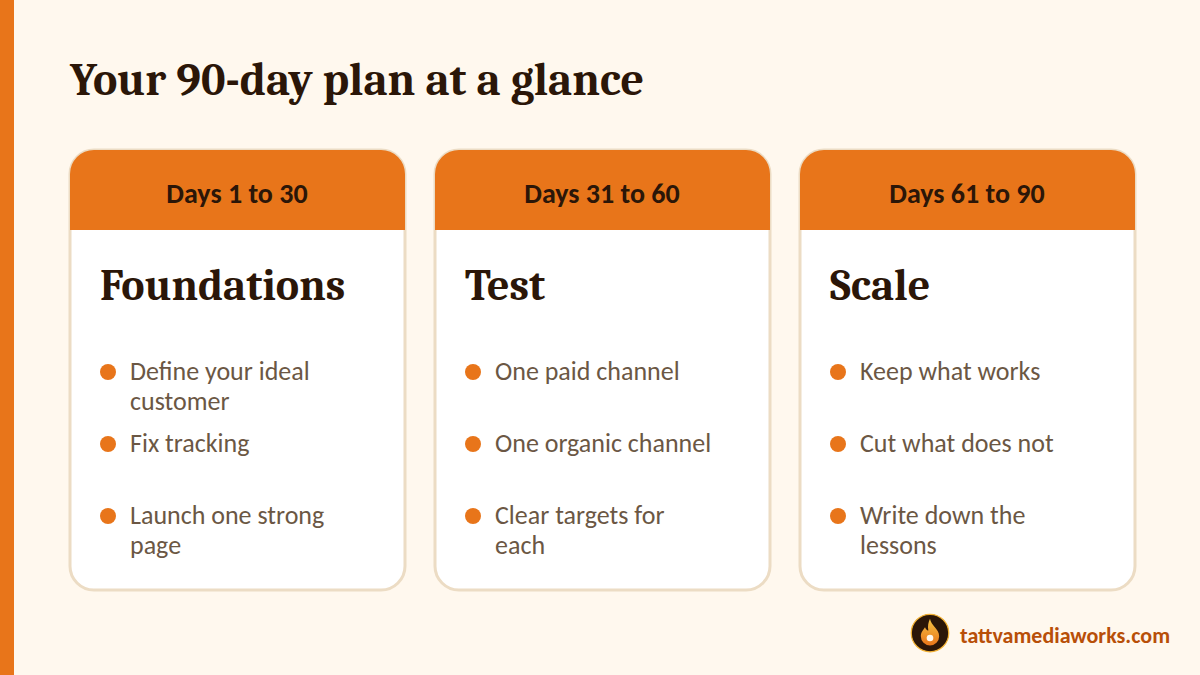
| Days 1 to 30 Foundations | Be clear and measurable | Define your ideal customer, sharpen your message, fix tracking, launch one strong page, talk to potential customers | A clear message and a working page with tracking |
| Days 31 to 60 Test | Learn what works | Run one paid and one organic channel, set targets for each, review weekly, collect early proof | Data on which channel and message brings customers |
| Days 61 to 90 Scale | Do more of what works | Increase spend on winners gradually, cut losers, write down your lessons, plan the next 90 days | A repeatable plan and your cost to win a customer |
Days 1 to 30: Foundations
Resist the urge to launch campaigns in week one. A few weeks of preparation saves months of wasted spend.
- Define your ideal customer. Who are they, what problem do they have, and where do they already spend time online? Be specific. “Small online fashion brands in India” is better than “businesses”.
- Talk to real people. Speak to 5 to 10 potential customers. Ask what they struggle with and how they solve it today. Use their own words in your messaging.
- Write a one-sentence promise. What do you do, for whom, and what result do they get? Put it at the top of your website.
- Launch one strong page. One landing page with a clear offer, proof where you have it, and one simple call to action beats a site with ten unfinished pages.
- Fix tracking. Install Google Analytics 4, record enquiries and sign-ups as conversions, and tag your links so you can see where people come from.
- Choose a place to record leads. A spreadsheet is enough: date, name, source, status and next step.
Our analytics and conversion optimisation service can help you set up tracking quickly and correctly.
Days 31 to 60: Test
Now you test, with small budgets and clear targets. The aim is to learn, not to win big yet.
- Pick one paid channel. Choose where your customers are: Google search for people already looking, Meta for visual products, LinkedIn for B2B. Set a fixed test budget you are comfortable treating as the cost of learning.
- Pick one organic channel. For example LinkedIn posts, Instagram, or helpful pages on your website. Post consistently for the full month.
- Set a target for each. For example, a cost per enquiry you can afford. Without a target you can’t tell if the test worked.
- Change one thing at a time. Test one offer, one audience or one creative at a time, so you know what caused any difference.
- Follow up fast. Reply to every enquiry quickly. Many early leads are lost simply because no one answered.
- Collect proof. Ask your first customers for a short testimonial and permission to share their results.
Give each test enough time to produce meaningful data, usually several weeks rather than a few days. Judging after three days is one of the most common ways to kill a channel that would have worked.
Days 61 to 90: Scale what works
Now you use what you have learned.
- Keep the winners. Look at your numbers by channel and message. Increase spend on what brings customers at a cost you can afford, in steps rather than all at once.
- Cut the losers. Stop channels that haven’t worked after a fair test. This is not failure. It frees money and time.
- Write down your lessons. Record your best customer, best message and best channel, and your cost to win a customer.
- Build assets that keep working. Publish a case study, set up a simple follow-up email series, and ask happy customers for referrals.
- Plan the next 90 days. Set a new goal with the numbers you now have.
If you want a second opinion on your plan, our growth consulting service gives you a clear roadmap you can run yourself.
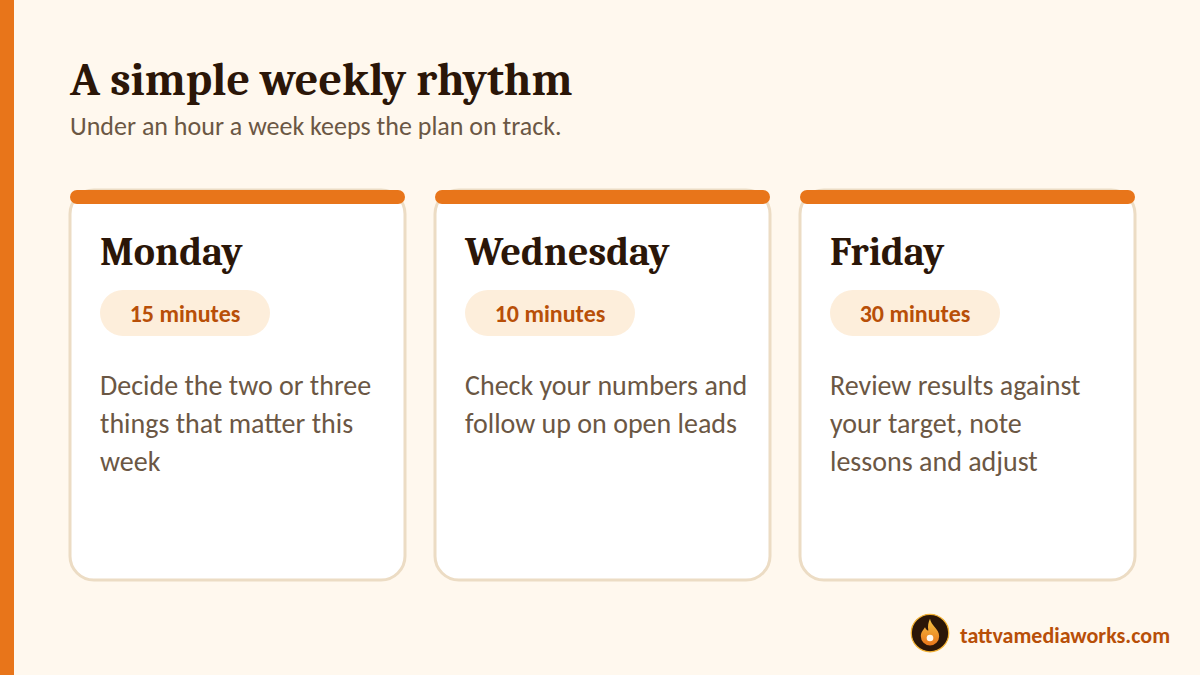
A simple weekly rhythm
- Monday (15 minutes): decide the two or three things that matter this week
- Wednesday (10 minutes): check your numbers and follow up on any open leads
- Friday (30 minutes): review results against your target, note what you learned, and adjust
Numbers to watch
| Phase | What to measure | Why it matters |
|---|---|---|
| Foundations | Visitors, enquiries, conversion rate on your main page | Your starting point for measuring progress |
| Test | Cost per enquiry, enquiries by channel, replies within a day | Shows which channel and message deserve more effort |
| Scale | Cost to win a customer, customers by channel, repeat or referral customers | Tells you how much you can safely invest to grow |
Common mistakes to avoid
- Trying to do every channel at once
- Launching ads before tracking works
- Changing everything at the same time, so you can’t learn what worked
- Judging a channel after a few days
- Ignoring follow-up, the cheapest way to win customers
- Skipping the review, and so repeating the same mistakes
Quick checklist
- One goal with a number for the 90 days
- Ideal customer defined and tested with real conversations
- A one-sentence promise on the website
- One strong landing page
- Tracking installed and tested
- A simple lead sheet
- One paid channel and one organic channel running with targets
- A weekly review in the calendar
- Lessons written down at day 90
Want a plan for your startup?
At Tattva MediaWorks, we help startups find their positioning, launch a website that is ready for marketing and run a focused plan around one or two channels. Read about how we work with startups and founders, or ask us for a free growth audit.