Cost per lead is the number almost every advertiser looks at first. It is easy to see in your ad dashboard, it is easy to compare, and a low number feels like a win.
The trouble is that it only tells you how cheaply you collected names. It says nothing about whether those people ever became customers. A cheap lead who never buys is the most expensive lead you can get, because you paid for it and got nothing back.
Why cost per lead misleads
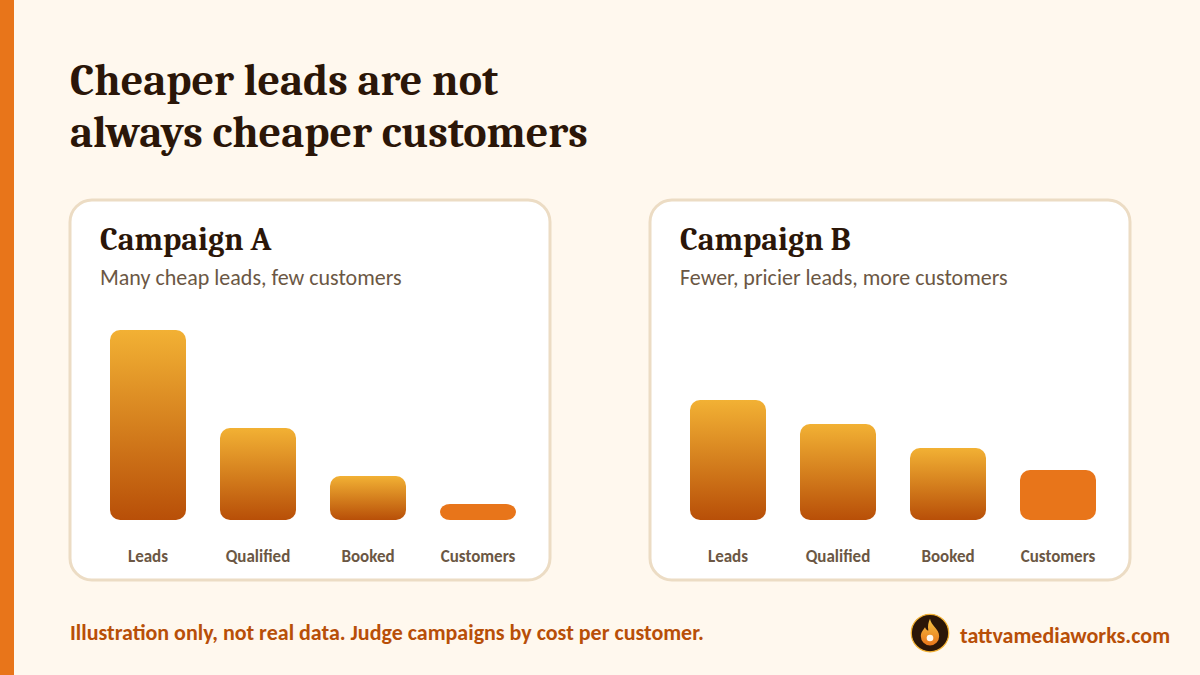
Imagine two campaigns. Both ran for a month. The numbers below are made up to show the idea.
| Campaign A | Campaign B | |
|---|---|---|
| Ad spend | Rs. 20,000 | Rs. 24,000 |
| Leads | 100 | 40 |
| Cost per lead | Rs. 200 | Rs. 600 |
| Customers won | 2 | 6 |
| Cost per customer | Rs. 10,000 | Rs. 4,000 |
Campaign A looks three times cheaper if you only watch cost per lead. But Campaign B brings customers at less than half the cost. If you move budget to Campaign A because its leads are cheap, you spend more and win fewer customers.
Step 1: Track every lead through stages
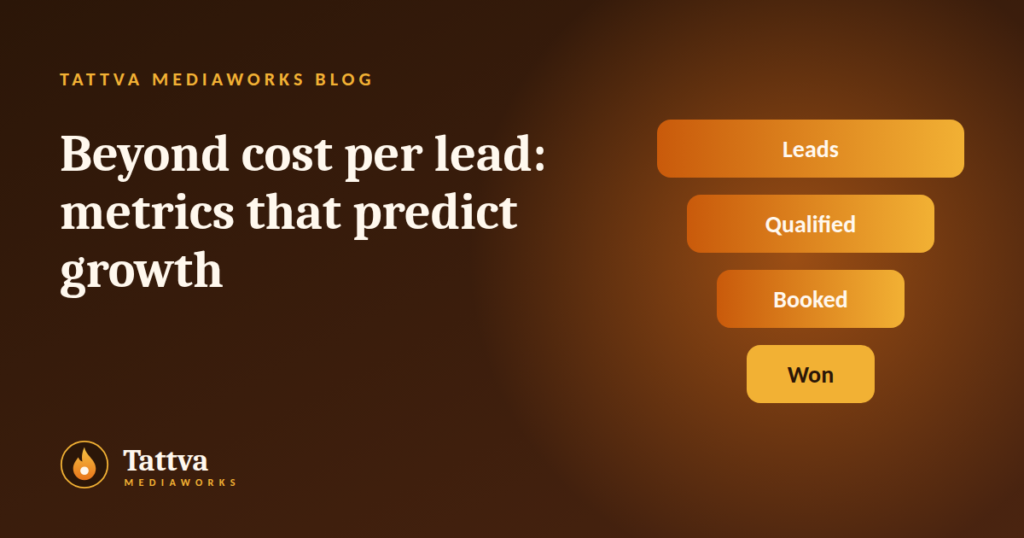
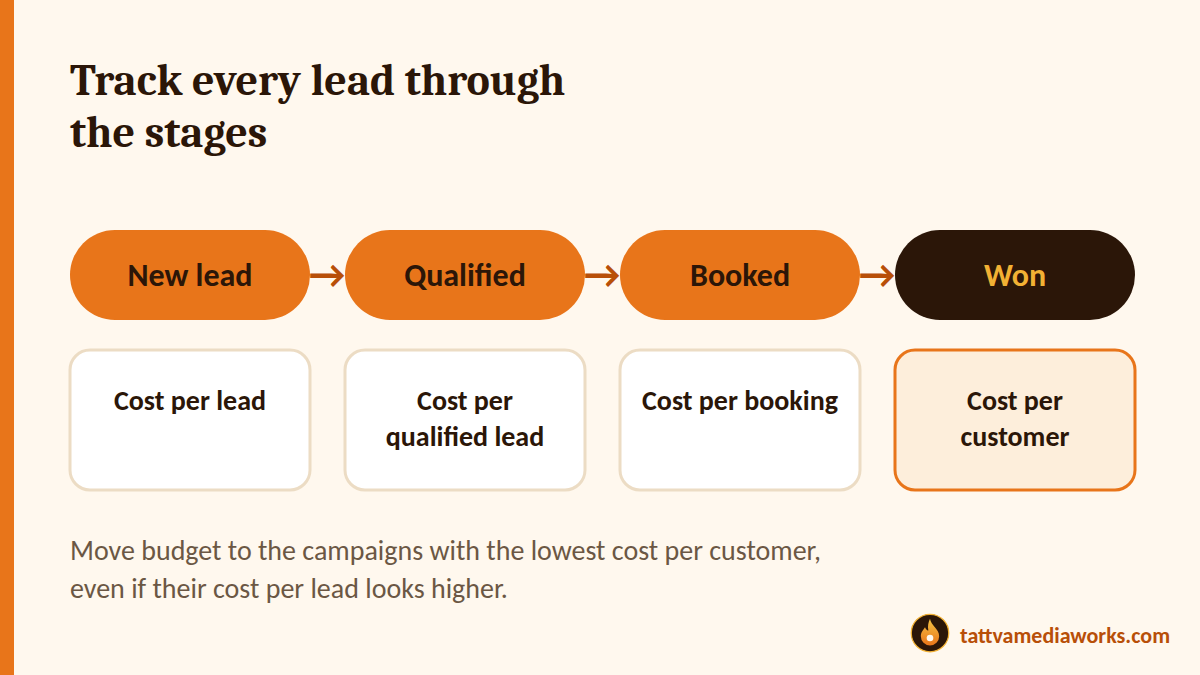
To see what is really happening, record where each lead ends up. A simple set of stages works for most businesses:
- New lead: someone filled in a form, called or messaged you
- Qualified: they fit your ideal customer and have a real need
- Booked: they booked an appointment, demo or call
- Won: they paid and became a customer
Define “qualified” in one sentence and keep it the same for everyone on your team. You can start with a spreadsheet: date, name, source campaign, stage and outcome. Update it weekly.
Step 2: Measure the numbers that predict growth
| Metric | How to work it out | What it tells you |
|---|---|---|
| Cost per qualified lead | Ad spend / qualified leads | Whether the leads are the right ones |
| Cost per booking | Ad spend / appointments or demos booked | How well leads turn into conversations |
| Cost per customer | Total marketing spend / new customers | What a customer really costs you |
| Conversion rate by stage | Leads at the next stage / leads at this stage | Where people drop out |
| Return on ad spend | Revenue from ads / ad spend | How much revenue each rupee of ads brings |
| Payback period | Cost per customer / monthly profit per customer | How many months until a customer pays back |
If you can only track one new number, make it cost per customer. It is the one that connects your spending to real business results.
Step 3: Make decisions with the new numbers
- Move budget to the campaigns with the lowest cost per customer, even if their cost per lead looks higher
- Fix the weak stage. If many leads are unqualified, improve your targeting. If few qualified leads book, improve your follow-up and offer
- Judge over a fair period. Customers often arrive weeks after the first click, so look at results over a longer window, not a few days
- Watch payback. A customer who costs more to win may still be worth it if they buy again and again
How to set it up
- Tag your campaign links so you can see which campaign each lead came from
- Record calls and WhatsApp enquiries as well as form fills, because many leads never use a form
- Ask every new customer “How did you hear about us?” and write down the answer
- Connect your ad accounts to Google Analytics, and update the stage of each lead in your sheet or CRM every week
Our analytics and conversion optimisation service helps businesses set up this kind of tracking so decisions are based on facts.
Common mistakes to avoid
- Judging campaigns only by cost per lead
- Treating every lead as equally valuable
- Reading results after only a few days
- Ignoring calls and WhatsApp enquiries that do not show up in the dashboard
- Replying slowly, so good leads go cold before you speak to them
Quick checklist
- We know what “qualified” means for our business
- Every lead is recorded with its source campaign
- We track new, qualified, booked and won
- We know our cost per customer
- Calls and WhatsApp enquiries are counted
- We review results weekly and over a longer period
- Budget moves to the campaigns with the best cost per customer
Want campaigns judged by customers, not clicks?
At Tattva MediaWorks, we plan and run performance marketing around cost per customer and clear targets, with plain-language reports every week. If you would like an honest look at your current numbers, ask for a free growth audit.